How to Find Clients Online in 2026 (Without Spamming Anyone)
The old playbook was simple: get a contact list, blast an email, chase replies, repeat. In 2026, that playbook gets you ignored, or worse - blocked. That's because inboxes are smarter, people are more sceptical about cold emails, and the bar for trust is higher than it has ever been.
The good news? Finding clients online is genuinely easier than it used to be, but only if you stop trying to force the relationship and start creating the conditions for people to come to you. Here's how to do it.
1. Stop broadcasting, start targeting
The biggest mistake freelancers and small businesses make is treating everyone online as a potential client. They post the same message to every channel, DM strangers with copy-pasted pitches, and wonder why nothing converts.
Spam isn't just sending unsolicited messages in bulk. It's sending the wrong message to the wrong person (even if it's just one message). When you reach out to someone who has no problem you can solve, you're wasting their time and your own.
Before you write a single piece of content or send a single message, answer these two questions:
- Who specifically has the problem I solve? (Not "small businesses." Not "entrepreneurs." A real, specific person with a real, specific pain.)
- Where do those people already hang out? (Which subreddits, communities, newsletters, podcasts, LinkedIn groups, or YouTube channels do they pay attention to?)
Your entire distribution strategy should follow from the answer. If your ideal client is a solo consultant who struggles with pricing, the place to show up is not TikTok - it's LinkedIn, specific Slack communities, and the comment sections of newsletters they read.
The targeting filter
- Would this person pay me tomorrow if they had the budget?
- Do they already recognise they have the problem I solve?
- Am I reaching them where they're already paying attention?
- If yes to all three, then this is your audience. Everything else is noise.
2. Earn attention before you ask for anything
Once you know where your audience lives, the goal is to be genuinely useful there, not just to pitch.
This is the part that most people skip because it feels slow. It isn't. It's the only thing that actually compounds. When you consistently show up in the places your ideal clients hang out and say something worth reading, you become the person they think of when the problem gets bad enough to do something about.
What this looks like in practice:
- Answer questions in communities, forums, and comment sections - real answers, not "DM me for more."
- Share specific insights from your own work. Not "here are 5 tips." What actually happened? What surprised you? What would you do differently?
- Create content that solves a specific problem your ideal client has right now, not a general overview of your field.
The goal is that when someone in your target audience sees your name, they already have a reason to trust you before they ever visit your page or see a single offer.
3. Have one place to send people
Here's where most people lose potential clients they've already earned.
They've done the hard part which is to create value, build trust, and get potential customers genuinely interested. Then they say: "DM me if you want to know more" or "Here's my email, reach out any time."
That's a dead end because most interested people won't DM you or send you an email. They'll mean to follow up and forget, so you need to be able to grab them while you have their attention, so it's crucial to have a prepared next step to point them out to.
What you need is a single place to send people - a page that explains what you do, who it's for, and makes it effortless for someone to raise their hand.
Not your full website. Not a PDF. Not a Google Form link.
A dedicated landing page with your value proposition front and centre, and a form that takes ten seconds to fill out.
3–5×
Higher conversion vs a generic Google Form
10 sec
Average time to submit a well-designed form
~20%
Typical conversion rate from warm audience traffic
4. Why your link in bio matters more than you think
If you're on Instagram, TikTok, LinkedIn, X, or YouTube, your link in bio is probably the most visited URL you own. It's the one place your audience goes when they want to know more.
Most people waste it because they link to a full website homepage with ten different things to click, or a generic Linktree with five options that lead nowhere useful.
Compare that to a page that says exactly what you do, shows who it's for, and ends with a form that says "I'm interested - here's my name and email."
The difference is enormous. A well-designed landing page with a clear single offer converts dramatically better than any of the alternatives, because it removes friction and gives your audience one obvious thing to do.
When someone asks "what do you do?" in a DM and you send them your link, that page should be comprehensive enough to do the selling for you, but also simple enough to convert them into a lead.
5. Make collecting leads a system, not an afterthought
Most freelancers and small businesses treat lead collection like an afterthought. They mention their email address in a post, or tell people to "reach out," or share a Google Form when they remember - this is not a system. It's hoping that the most motivated 1% of your audience does the work for you.
A lead collection system means:
- One URL that goes everywhere - bio, posts, comments, videos, email signature
- A form that works - short, mobile-friendly, clear about what happens next
- A dashboard where you can see who submitted and when, without digging through emails
When the system is in place, leads accumulate in the background without you having to do any work. You post content, direct people to your link, and your dashboard fills up without you having to manually chase anyone.
6. LeadLanding: the fastest way to set this up
This is where LeadLanding comes in.
LeadLanding lets you build a landing page in minutes: you just describe your service, the AI generates a complete page with your offer, your key points, and a built-in lead capture form. You hit Publish, and you have a URL you can put everywhere.
You don't need to build a website manually, or integrate with separate tools to automate lead collections and analytics. Everything is in one place: your page, your form, your leads, your traffic.
The difference between a LeadLanding page and sending someone a Google Form link:
It looks professional
A branded landing page with your service description, value proposition, and designed form reads completely differently from a raw Google Form URL. It signals that you take your work seriously — which matters when someone is deciding whether to trust you with money.
It converts better
A page that explains what you do and who it's for warms people up before they hit the form. They arrive with context. They know what they're signing up for. Conversion rates from warm audiences are typically 3–5× higher than sending a cold form link.
You can see what's working
LeadLanding shows you how many people visited your page, when they came, and how many converted. That data tells you which post or platform is driving real interest — so you can double down on what works and stop wasting time on what doesn't.
You own the leads
Every submission lands directly in your LeadLanding dashboard. No email threading, no spreadsheet to update manually. You have names, emails, and timestamps — a real list you can follow up with on your own terms.
What your page looks like with LeadLanding
First impressions matter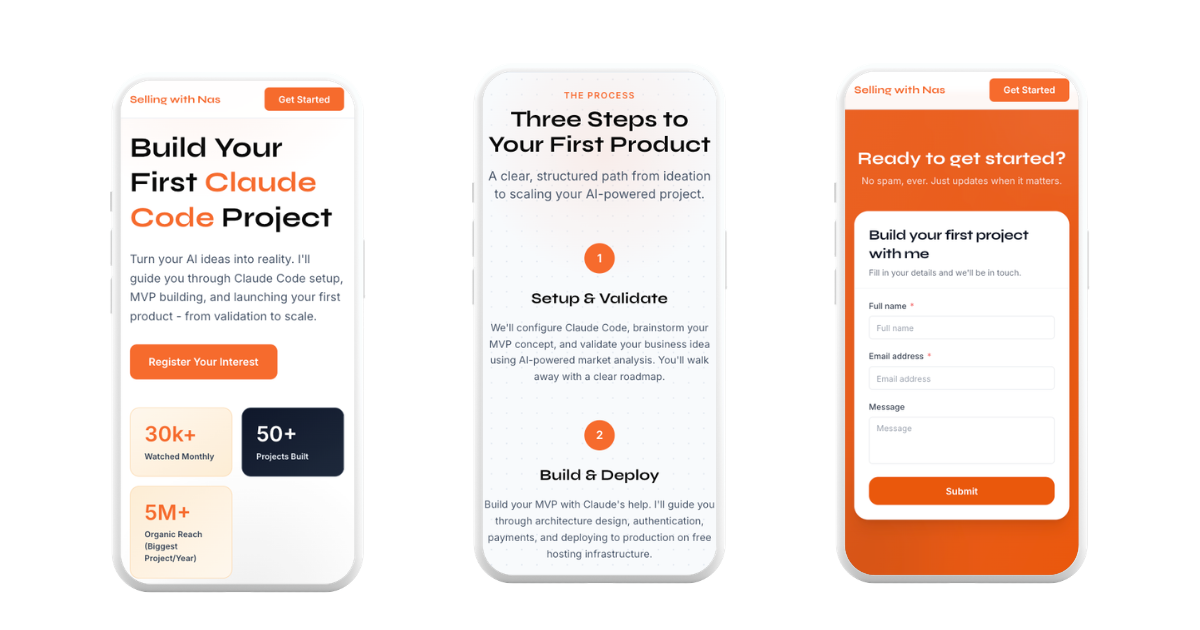
7. The follow-up: where most people win or lose
Getting a lead into your dashboard is the beginning, not the end.
Once someone submits your form, the clock starts. They're interested now. In 24 hours, something else will be occupying their attention. In a week, they may have forgotten they submitted at all.
The follow-up doesn't have to be complicated. A personal reply that thanks them for their interest, tells them what happens next, and asks one question about their situation is enough to start a real conversation. Most of your competitors won't bother sending that message - which means you stand out just by doing the obvious thing quickly.
What you're not doing: sending a generic drip sequence. Cold automation to a warm lead undoes the trust you built to get them there. Write it like a person, not a funnel.
A simple follow-up framework
- Reply within 24 hours - same day is better
- Acknowledge what they submitted (personalise it, don't template it)
- Tell them one specific thing about what working with you looks like
- Ask one question - what's the thing they're trying to solve right now?
- Keep it short. Three sentences is fine.
The full picture
Getting clients online in 2026 doesn't require a huge audience, an ads budget, or a complex funnel. It requires doing a few things consistently well:
- Know exactly who you're trying to reach - and go where they already are
- Show up with genuine value before you make any ask
- Have one clear link that explains your offer and captures interest
- Make the form work for you - a proper landing page, not an afterthought
- Follow up like a human - fast, personal, and with a question The people who get clients online are not the ones with the biggest followings. They're the ones who make it easy for the right people to say yes.
Build your page. Put the link everywhere. See who raises their hand.
Ready to set up your lead page?
Build a landing page that explains your offer, captures leads, and shows you exactly who's interested — in under five minutes. No website needed.